
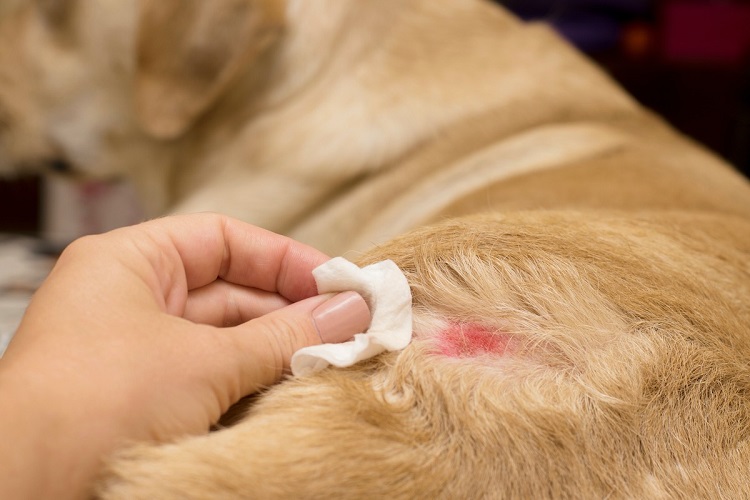
It is a chronic, non-contagious inflammatory skin disease. It is an allergy-related disease and is the second most common allergic skin disease in dogs. [1] It can begin acutely and become chronic over time. [2] It is known as vascular dermatitis or canine eczema, as it is also called Hot spots and areas in dogs, which means irritation, redness, and itching, which in turn causes annoying skin inflammation and long-term itching, which forces the dog to lick, chew, or scratch, which exacerbates the problem, affects the dog’s life, and makes the symptoms worse.
Table of Contents
Forms of skin eczema in dogs
There are two forms of eczema in dogs:
- Wet eczema: It is eczema resulting from an infection on the surface of the skin after bacteria penetrate it and grow inside it as a result of damage and wounds to the skin itself, either through changes in the skin or scratching by the dog. This infection causes severe itching through which the dog scratches itself, which leads to more damage and spreading itching.
- Dry eczema: This is eczema that appears in the form of crusts and crusty layers on the surface of the skin, and is hairless. This type of eczema may be chronic and increases the risk of other diseases.
Causes of skin eczema in dogs
There are several possible causes of skin eczema in dogs, which are:
- Parasites such as fleas, mites, and ticks.
- Bacterial, fungal or viral infection.
- Allergies to the surrounding environment such as pollen, weeds, and dust mites.
- Exposure to chemicals such as detergents, benzene or exposure to plants or other irritating substances.
- Licking an inflamed or painful area.
- Metabolic disorders and vitamin deficiencies.
- Anal sac disease and the anal sacs in dogs.
- Poor hygiene, the spread of dirt, dust, and high humidity in the folds of the skin, in addition to the irritating effects of saliva and tears.
- Obesity.
- Genetic predisposition due to breed.
- Eating and food disorders.
Symptoms of skin eczema in dogs
Symptoms worsen as the condition progresses and the affected area is not treated. The ears, feet, lower abdomen, thumbs, front of the mouth, thighs, base of the tail, around the eyes, and between the toes are among the most affected areas, [1] and among the symptoms that appear in dogs with eczema. The skin includes:
- Redness, rash, or discoloration of the skin, especially the abdominal area.
- Severe itching.
- Licking and scratching the skin and chewing the paws.
- Rubbing the body with furniture or other surfaces.
- Hair loss and loss.
- The feeling of pain.
- Flaky, dry skin or dandruff.
- Skin thickening and color change, especially in hairless areas.
- Wounds and ulcers.
- Discoloration of saliva, as saliva becomes red or brown.
- Redness of the ears with dark, waxy secretions.
- Oily or inflamed skin with odor.
Risks of skin eczema in dogs
There are risks and complications of skin eczema in dogs if it is not treated or if appropriate action is delayed, including:
- Increases stress levels.
- Changes in general behaviors, such as increased and worsening itching, chewing, hyperactivity, eating feces, stealing food, seeking attention, excitability, decreased trainability, and excessive tasting.
- Excessive itching can lead to people turning away and being aggressive when touching the site of the injury.
- Chronic ear infections are caused by excessive wax production due to allergies, which in severe cases may lead to deafness.
- Skin inflammation as it spreads to other parts of the body.
- Severe bacterial infections.
Treatment and prevention of skin eczema in dogs
Treatment depends on the main cause of the disease and thus its prevention. Methods of treatment and prevention include the following:
- Use anti-inflammatory medications or antibiotics, especially those that contain cortisone, which are effective anti-inflammatory and anti-itch medications.
- Use special medical shampoo and regularly bathe your dog.
- Clean the place well and wash the bedding regularly to get rid of the causes of eczema and allergies.
- Use a suitable and special diet based on medical prescription.
- Remove plants or materials to which the dog is allergic.
- Reduce direct exposure to sunlight, heat, or cold.
- Reduce the use of chemicals or keep them away from where the dog is.
Tips for keeping dogs healthy
Dogs’ health can be maintained by:
- Determine a balanced diet for the dog after conducting a blood test at an early age to test its sensitivity and determine the appropriate diet.
- Bath the dog regularly and make sure it is clean.
- Ensure the cleanliness of the place, home, and environment surrounding the dog.
- Avoid chemicals that may cause skin irritation.
- Choose high-quality food without artificial food colorings or flavorings.
- Prompt veterinary treatment for itching before it worsens to prevent secondary infections and complications.
