
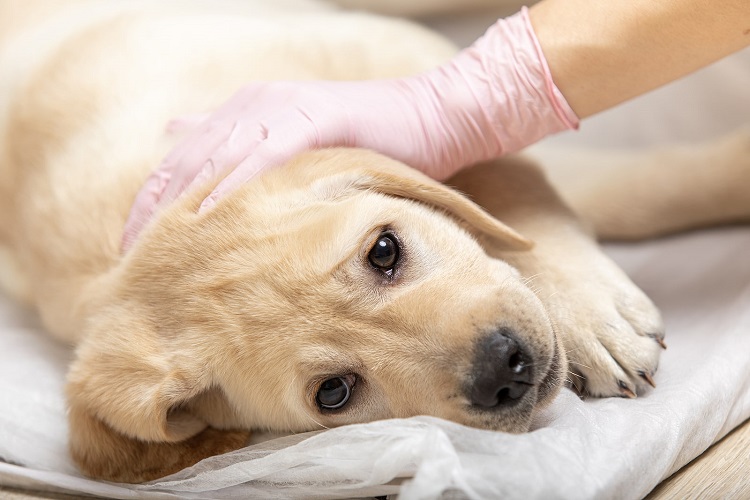
Parvovirus disease in dogs (CPV) appeared for the first time in 1978 AD, and due to the seriousness of this disease and its rapid spread among dogs, it received a great deal of public attention. This disease is also similar to leukopenia in cats, known as feline fever, [1] and this article will discuss the symptoms of parvo in dogs.
Table of Contents
What are the symptoms of parvo in dogs?
Symptoms of parvo in dogs are as follows:
- Severe diarrhea, which is bloody in some cases.
- Vomiting.
- fever.
- Lose weight quickly.
- Lack of appetite for food.
- The dog feels lethargic all or most of the time.
- Dehydration occurs, due to a lack of fluids and protein.
- Rapid heartbeat.
What are the causes of parvo in dogs?
It should be noted that parvo is a rapidly contagious disease that spreads quickly among dogs, especially since parvo lives in dogs for months, and is considered resistant to many disinfectants. The following are the reasons why dogs become infected with parvo:
- The dog comes into contact with contaminated feces.
- Touching surfaces contaminated with the disease.
- Touching fur and feet contaminated with the disease.
What are the ways to prevent parvo in dogs?
Ways to protect your dog from contracting parvo are as follows:
Get the designated vaccination
It is recommended to provide the dog with the parvovirus vaccine, as it is an essential and effective vaccine in maintaining the dog’s health and the risk of contracting dog diseases. The dog should also be given the vaccination when it is approximately 8 weeks old, and continue to take it until the age of 16-20 weeks, and in the event that the vaccination is not provided For a dog at this age, you must consult a veterinarian for the necessary procedures.
Spreading awareness about the disease
So, close individuals and neighbors must be informed about parvo and the ways it spreads infection, and thus others take care of the spread of the disease, and it also works to sterilize the places where the dog lives, and sterilize the tools as well.
House disinfection
The house must be constantly disinfected to prevent the dog from contracting parvo, using bleach, which consists of half a cup of bleach per gallon of water, and is used to clean contaminated surfaces such as toys, floors, bowls, etc. Beds, clothes, and fabrics must also be washed. Which may be suspected of transmitting the disease infection, in addition to exposing it to high temperature, as high temperature contributes to drying the fabrics well and reducing the spread of diseases in general.
What are the methods for diagnosing parvo in dogs?
Parvo is diagnosed in dogs by conducting ELISA tests in the stool, which are tests that measure enzyme-linked immunosorbent. This procedure is considered one of the common procedures for diagnosing a dog with parvo. The test requires taking a stool swab, and it takes about 10 minutes to obtain the result. This test is considered accurate, but its negative result does not necessarily rule out the presence of parvo in a dog that shows symptoms of the disease.
