
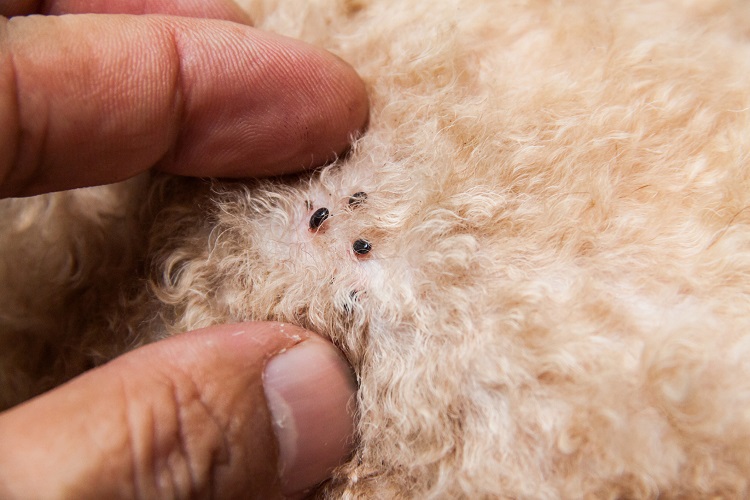
Fleas are annoying, extremely small parasitic organisms, ranging in size from 1-5 mm. [1] They are wingless and transmit by jumping. They adopt a parasitic lifestyle, relying on sucking blood from dogs as their main source of food. [2] Fleas are among the most common … Common and widespread problems among dogs that constitute a source of anxiety and inconvenience for dogs and their owners.
Table of Contents
Causes of fleas in dogs
Dogs are infected with fleas for several reasons, including:
- Direct contact with other infected dogs, as fleas spread quickly and are highly contagious, so they jump from one dog to another.
- Picking up fleas from the surrounding environment, as fleas can survive on furniture, bedding, rugs, and carpets.
- Transmission of fleas through humans, as fleas are characterized by their ability to attach to human clothes and shoes.
- The dog picks up fleas from gardens, especially since grass and soil represent a suitable environment for immature fleas.
Symptoms of fleas in dogs
Dogs being infested with fleas are accompanied by indicators and signs that help you make the initial diagnosis and move quickly toward solving the problem, including:
- Excessive itching and constant scratching in the dog.
- Redness and irritation of the skin.
- The feces and remnants of fleas appear on the dog’s back in the form of small flakes whose color resembles the color of dried blood.
- The dog’s hair falls out and bald spots appear on its body.
- The dog’s constant licking and biting of itself.
- Flea eggs appear on the dog’s fur, as they appear oval in shape and white in color, about the size of table salt.
- Wounds spread along the dog’s body resulting from flea bites in order to suck blood.
- Seeing brown fleas scurrying and moving through your dog’s fur.
Flea risks and complications
The most prominent dangers of fleas are as follows:
Dangers of fleas on dogs
Flea infection seems simple, but sometimes it may result in fatal complications, especially if it is not treated as quickly as possible, and these complications include:
- Anemia because fleas feed mainly on the host’s blood.
- Skin allergies such as rashes and sores.
- Infection with intestinal tapeworms, as fleas, are an intermediate host for tapeworms and carry their larvae in their salivary glands. When a dog licks its fur, it introduces those fleas and tapeworms into its intestines to settle there.
- Suffering from allergic dermatitis, which is a skin condition whose symptoms appear in the form of hot, hairless spots spread over the dog’s body, especially on the back and the base of the tail.
The dangers of fleas to humans and other animals
Fleas bite humans, but they cannot remain on his body, as they must leave for the body of the appropriate host, which is the dog. [ 15] Among the dangers of dog fleas to humans and other animals are the following:
- Itching and irritation of the skin.
- Some people have an allergic reaction, and one of its symptoms is a skin rash.
- Swelling and redness of the skin on the first day, and on the second day it develops into red-headed pimples surrounded by a white areola.
- Infection with diseases carried by fleas, as fleas, are a vector of diseases between different organisms. Symptoms of these diseases include high temperature, abdominal pain, general weakness, fever, dizziness, and nausea.
- Intestinal tapeworm infection if these fleas are accidentally swallowed.
Treatment and prevention of fleas in dogs
Below are some tips and methods for treating and preventing dog fleas:
Treatment of fleas in dogs
Consulting a veterinarian is the best step in treating and eliminating fleas. Many types and forms of medications and chemical treatments are available in markets and veterinary clinics that work to kill fleas or inhibit their growth, examples of which include the following:
- Immediate topical treatment for fleas: It is placed on the dog’s back, specifically in the neck area. It is characterized by its rapid and strong effect and works to kill fleas and inhibit the development and growth of eggs.
- Medication tablets and pills: The treatment is taken in the form of medicinal tablets and pills, which work to prevent the eggs from developing into adult fleas.
- Flea killer powder: The powder is sprinkled on the dog’s fur and kills only adult fleas, but it does not affect the eggs or larvae. It also lasts for a short period and does not have a long-term effect.
- Flea bath soap: This is a special shampoo with which the dog’s fur is washed, but it is not considered an effective treatment alone, as it kills fleas at bath time but does not prevent them from growing again.
Tips and steps for flea prevention
Prevention is an important way to protect the dog from flea infestation, and the following are some steps that reduce the infestation:
- Reduce the time your dog spends outside the home.
- Reducing the chances of communication and meeting between the dog and other wild animals.
- Maintain a routine of bathing and caring for the dog’s hygiene regularly.
- Make frequent inspections of the dog’s fur to ensure it is free of fleas.
Ways to get rid of fleas from home
By following these steps, you can get rid of fleas and any eggs stuck to the furniture, to avoid infecting the dog with fleas again:
- Wash the dog’s sleeping places and all cotton toys with hot water and soap.
- Wash bedding, covers, rugs, sofas, and any other place where the infected dog has previously been.
- Vacuuming and cleaning carpets and floors.
- Use flea sprays and multi-purpose insecticides to eliminate all forms and stages of flea growth.
